
Electricity has played a very important role in our modern society for more than 100 years, especially since the moment electricity was used for creating light and performing labor. As of 2011, there are many new developments that make the field of electricity supply even more interesting. Developments continue both in the field of electrical engineering and in societal aspects. This book attempts to provide an overview of the technical aspects of electrical power supply in the past, present, and near future.
The translation of ‘Networks for Electricity Distribution’ was created with the help of artificial intelligence and carefully reviewed by subject-matter experts. Even with our combined efforts, a few inaccuracies may still remain. If you notice anything that could be improved, we’d love to hear from you.
The developments that led to today’s electric power systems have a long history, that started with the discovery of static electricity. Already in ancient times, humanity was aware of phenomena related to static electricity. By rubbing amber with animal fur, it became statically charged and could attract light objects. Electricity owes its name to the ancient Greek word for amber (Elektron = ηλεκτρον). In 1663, Otto von Guericke built an electrifying machine based on this principle, which for the first time made it possible to generate electrical charge in a controlled manner. Thanks to the invention of the Leyden jar by Pieter van Musschenbroek in 1746, it was also possible to store this charge. In the seventeenth and eighteenth centuries, numerous researchers began to investigate the then-unexplained electricity. Their findings led to countless speculations and discoveries. However, electrostatic machines only produced a single burst of current. Only with the advent of the battery (Volta, 1800) it became possible to produce a continuous current. Scientific research then took off, and gradually engineers began to develop usefull applications. With the invention of a practical incandescent lamp, large-scale application of electricity became accessible to many.
Progressive citizens began equipping hotels, factories, churches, and residences with incandescent lamps powered by their own dynamos or batteries. In 1879, Edison realized that central generation of electricity would open up a huge market: “We will make electricity so cheap that only the rich will burn candles”. However, he first had to develop a complete electrical network, including dynamos, cables, and accessories such as fittings, fuses, and electricity meters. In 1882, he commissioned the world’s first power station, which supplied 110 V direct current voltage to a few blocks around Pearl Street in Manhattan. At that time, 100 V lamps close to the plant could operate at a voltage of 110 V. When transported over more than 2.5 km, the voltage drop in the low-voltage lines became too high, limiting the size of the supply area. Within a few years, there were more than a hundred direct current power plants in America.
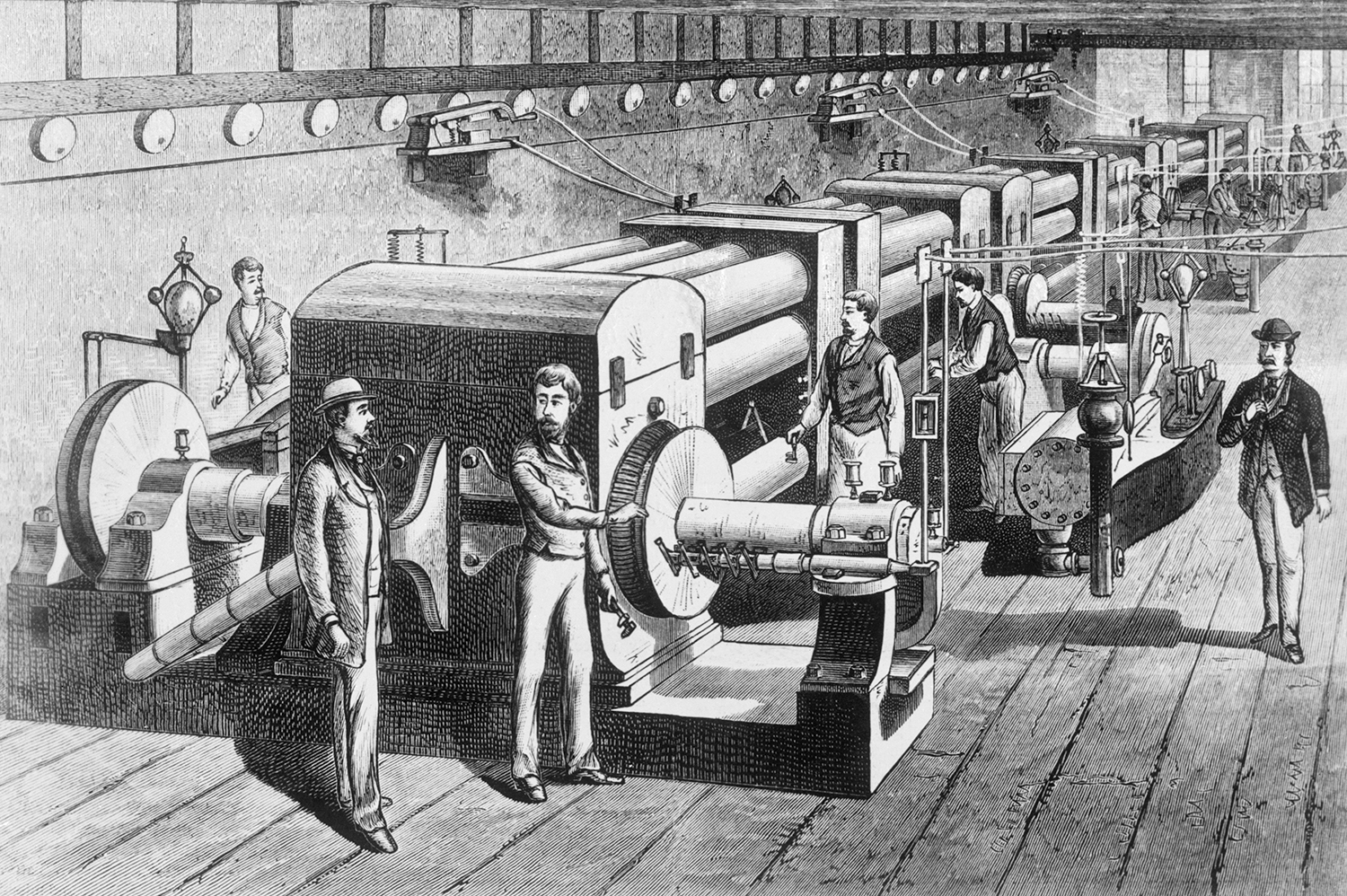
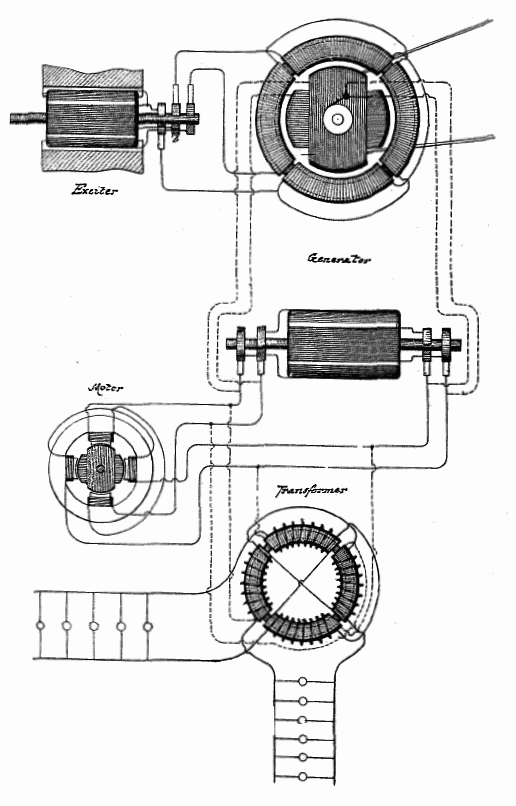
In 1884, the Croatian Serb Nikola Tesla emigrated to America to work with Edison in New York. Tesla brought with him from Europe the conviction that alternating current was superior to direct current. However, Edison continued to adhere to direct current. Therefore, in 1888, Tesla went to work for Westinghouse in Pittsburgh. There, he developed a complete alternating current system with transformers, induction motors, and dynamos, see figure 1.2. One of the major advantages of alternating current over direct current is that the voltage can be converted to higher and lower levels using a transformer. With a high transmission voltage, the current to be transported is correspondingly lower, limiting the losses in the lines and thus increasing the size of the supply area, compared to that of a 110 V direct current system. In 1890, the first alternating current station was commissioned.
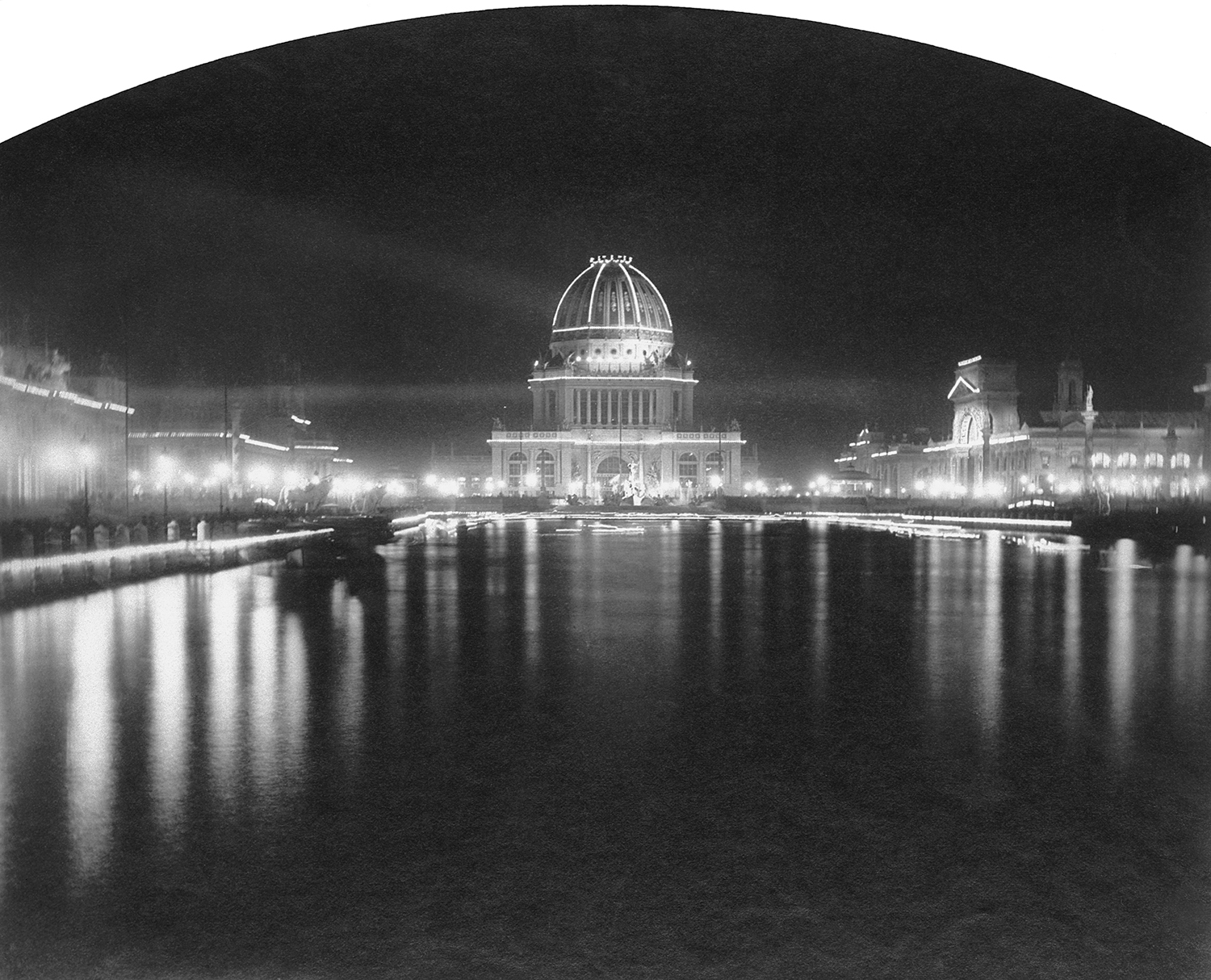
In the late 1880s, the “War of Currents” broke out. Edison tried to protect his interests in direct current. He particularly stressed the dangers of high alternating voltage: with public experiments on animals, he attempted to demonstrate how deadly alternating current was. He ensured that the newly invented electric chair would therefore be equipped with alternating current. It was a futile struggle, which was decided in 1893. Armed with Tesla’s alternating current system, Westinghouse was commissioned to provide lighting for the Chicago World’s Fair. At the fairy-tale illuminated exhibition, 27 million visitors admired the twelve 1000 hp alternating current generators and Tesla’s polyphase AC power generation and distribution system.
In North America, a nominal voltage of 110 V was chosen because, around the 1880s, carbon filament lamps had been designed for a voltage of 100 V with a tolerance of +10%. The higher voltage was necessary to account for voltage loss over low-voltage lines and cables. To reduce currents in the low-voltage network, the Berliner Elektrizitäts-Werk (BEW) chose a voltage level twice as high, 220 V, in 1899. With the invention of the incandescent lamp with a metallic filament, it was possible to design these lamps for the higher voltage. The cost of replacing equipment for their customers was less than the savings on network loss. This choice set the standard for the nominal voltage of 220 V in Germany and Europe.
Regarding the frequency, there was no consensus in the early days. International trade in electrical appliances forced people to accept a standard. In North America, the preference for 60 Hz grew. However, the German company AEG chose a frequency of 50 Hz for their first large power station, presumably because 60 was not a preferred number (from the series 1-2-5). Since AEG had a monopoly in those days, their standard could be spread across the rest of Europe.
As in America, the first electricity companies in the Netherlands were also private initiatives. In 1884, Captain Achilles De Khotinsky began selling electricity in Rotterdam. During the day, he charged open batteries in Rotterdam-South, which he then sailed across in the evening to supply office buildings with electricity. The system was not perfect: in heavy weather, the sulfuric acid sloshed over the edges of the batteries during the crossing. Because the municipality opposed his plans to build power stations in the city, De Khotinsky left for Germany in 1888.
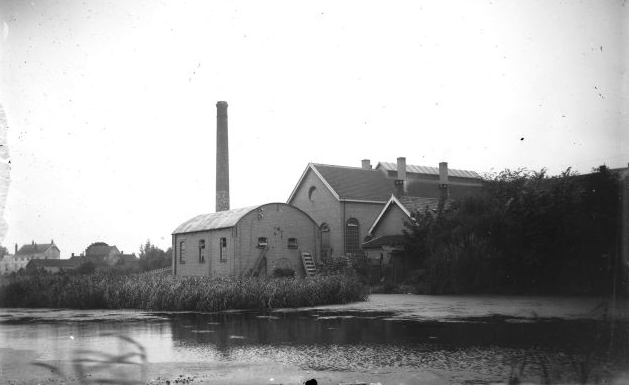
The first Dutch public power station was built in 1886 by Willem B. Smit in Kinderdijk, equipped with an 80 hp steam engine and two direct current dynamos, each with a capacity of 7.5 kW. Until 10 PM, he supplied electricity for 300 ‘light points’ to businesses and households. Soon, electricity companies were established all over the country. Municipalities often responded cautiously because they were concerned about the survival of their gas facilities. When they realized that the rise of electricity was unstoppable, larger cities decided to take charge of electricity generation and distribution themselves from 1900 onwards. In twelve years, the total installed capacity in the Netherlands grew from 3 to 70 MW.
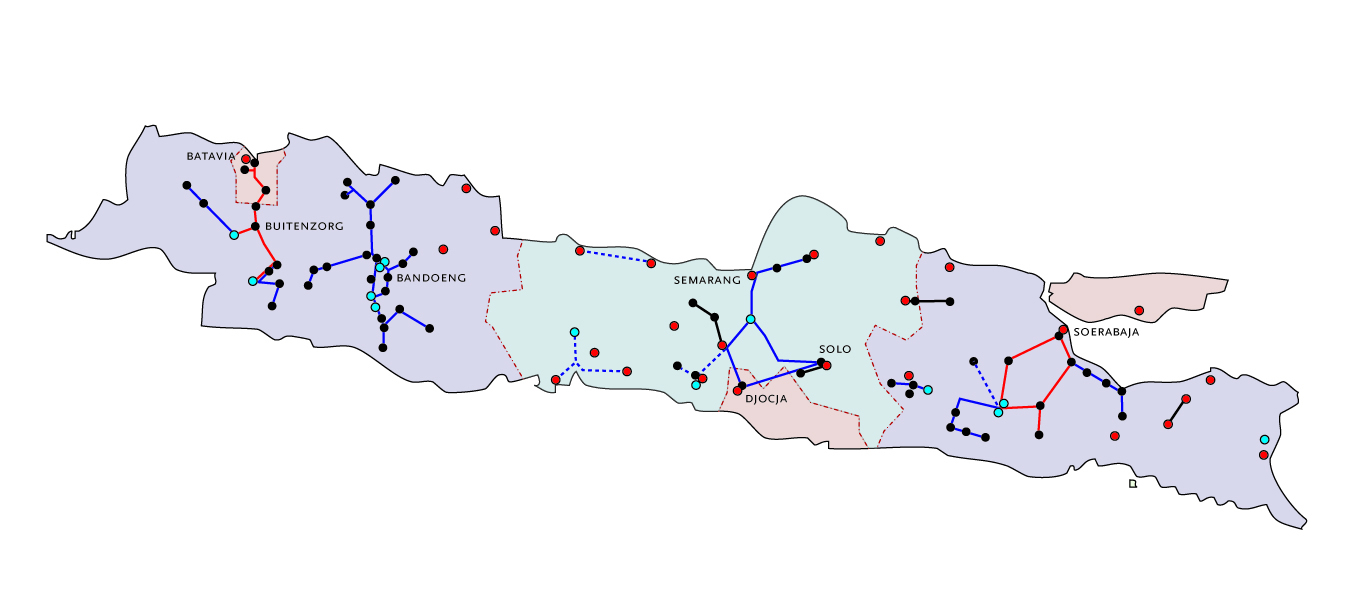
As early as 1890, the Dutch East Indies government regulated the electricity supply with a very progressive ‘ordinance’. Consequently, electricity generation in the Dutch East Indies began as a private initiative. Unlike in the motherland, it remained that way. Thanks to its ordinance, the government was able to direct private enteroprises.
The distribution voltage was generally 220/127 V. The voltage was lower than in the Netherlands, partly because “the native population walks barefoot.”
Although electricity was already available in many cities in 1938, the number of connections was much lower than in the Netherlands. For example, there were many kilometers-long 30 kV lines, along which only about 60 kW was transmitted.
In Curaçao, a concession was granted to the American L.B. Smith as early as 1889. The concession quickly came into the hands of ‘Maduro & Sons’ and was later transferred to the Netherlands-Indies Gas Company. This company also started an electricity business in Paramaribo in 1930.
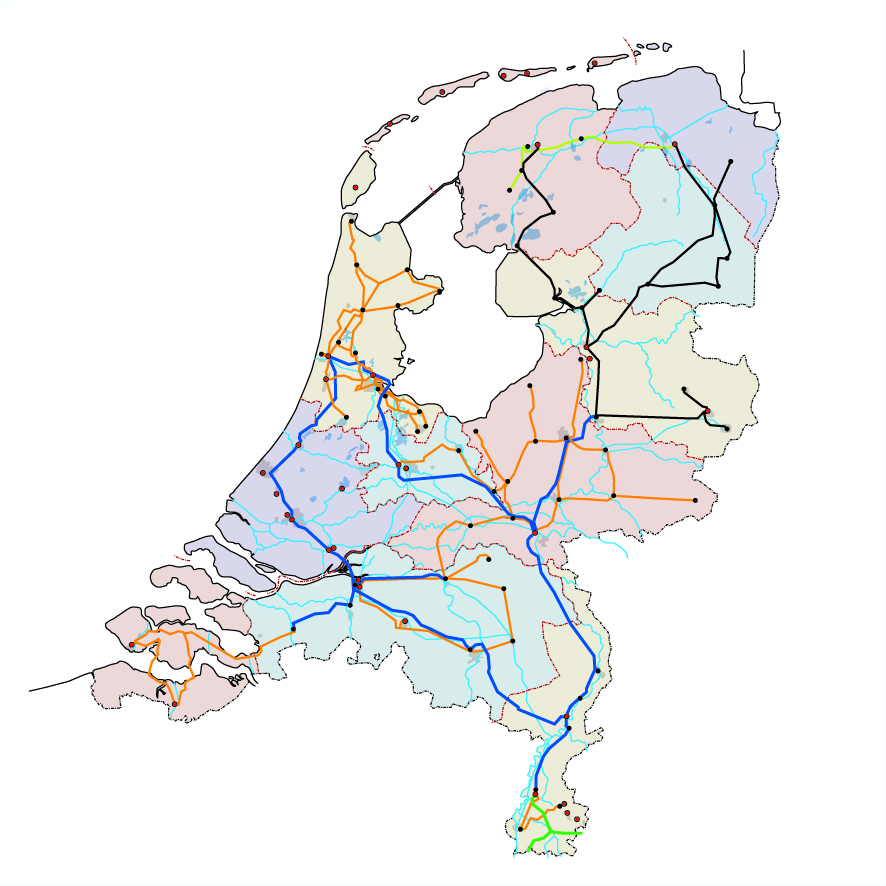
Around 1920, the Netherlands had about 550 electricity companies, of which 480 were exclusively distribution companies. At that time, Amsterdam was the most electrified city in the world, and the electricity supply in most other Dutch cities was also well organized. Surrounding areas were connected to the local grids around the cities, but none of the companies were interested in electrifying the countryside. However, the government insisted that “unprofitable areas” should also be connected. By Royal Decree, “Provincial Electricity Companies” were established to provide electricity to their entire service areas. Only Drenthe and Zuid-Holland did not receive a provincial company. Drenthe was divided between Groningen and Overijssel (IJsselcentrale), while in Zuid-Holland, electrification from the major cities had progressed so far that it was decided not to change it. The companies in Friesland, North Holland, and Groningen were purely government-owned, while those in Utrecht, Gelderland, North Brabant, Zeeland, and Limburg were N.V.’s (public limited companies) with the provinces as shareholders. As a result, the latter were able to act much more decisively until the end of the twentieth century. During this period, the “Arnhem Institutions” also emerged, organizations like KEMA, VDEN, and VEEN, wherein the electricity companies collaborated.
Immediately after the Second World War, The Netherlands had 10 provincial and 69 municipal and other distribution companies. Historically, the distribution network consisted of a wide variety of above-ground and underground connections. Thin medium-voltage cables were also very common. The transformers, acquired between World War I and World War II, came in all shapes and sizes. This situation prompted the standardization of the electricity supply system. The choice for standardized voltage levels for various functions was also made during that time.
Significant investments were made in the provinces. In Noord-Brabant, two ring-shaped 50 kV networks were completed by 1922, and work began on a 150 kV line. In the north, they opted for 60 kV networks. Groningen and Friesland connected their networks in 1929 to utilize their power plants more efficiently. In Limburg, a line was constructed that connected the mines’ power plants with the ones in the north.
Soon, there was talk of establishing a national interconnected grid. KEMA director Van Staveren pondered this idea. Together with co-director De Zoeten, he was evacuated after the Battle of Arnhem and ended up in the village Eerbeek. During their evacuation, they developed a comprehensive plan for the post-war structure of the Dutch electricity supply. This led to the founding of the N.V. Samenwerkende Electriciteits-Productiebedrijven (SEP) in 1949, with both gentlemen as directors.
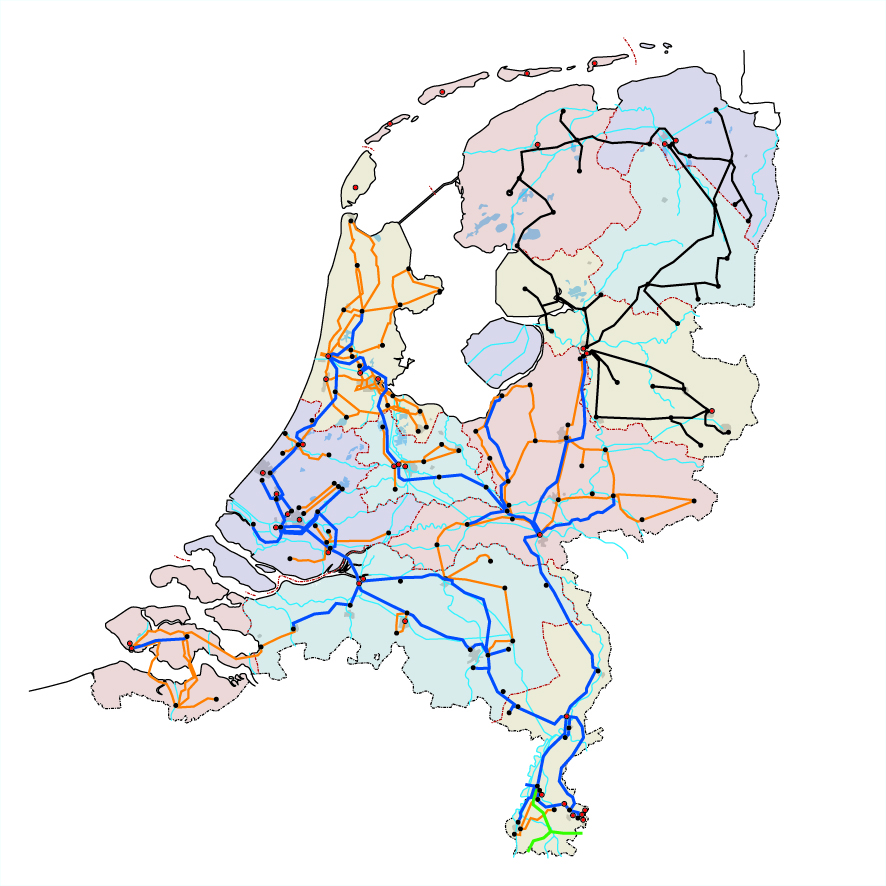
In 1950, the power plants of Limburg, Noord-Brabant, and Zuid- and Noord-Holland were interconnected, and via Lutterade (near Geleen), the exchange of electrical energy with foreign countries was possible. Three years later, all power plants in the Netherlands were interconnected. However, the central control from Arnhem got off to a slow start. It took 28 years before the starting and stopping of the power plants in the Netherlands was actually coordinated from Arnhem, thanks to the Landelijke Economische Optimatie, LEO (Dutch national economic optimization program) of the electricity production companies.
From the the 1950s, electricity usage increased rapidly along with prosperity. In 1960, national production was 16.5 TWh. Ten years later, it was 41 TWh. Annual consumption per capita rose from 1300 to 2900 kWh. A substational increase, although in the US, consumption in 1970 was as high as 7400 kWh per capita.
Throughout the Netherlands, hard work was done to manage that growth. Many 50 kV grids were replaced by 150 kV grids, and the north cleared out the 60 kV grids. In 1962, the Netherlands had a northern ring of 110 kV and a southern ring of 150 kV. These grids would not be able to handle the growth in the long term. Therefore, it was decided to construct a national 380 kV backbone transmission network (Koppelnet in Dutch). In 1970, the first part of this grid was inaugurated by Prince Claus. Not all electricity companies were equally enthusiastic about the realization of the coupling grid. As a result, the grid did not follow the ideal route but mainly ran along the edges of the service areas. And after just a few years, construction stalled. When the western half of the ring was completed, some companies did not see why they should contribute to finishing the ring. They preferred to invest in connections for their power plants in Maasvlakte, Borssele, and IJmuiden. It was not until 22 years later (in 1991) that the ring was completed.
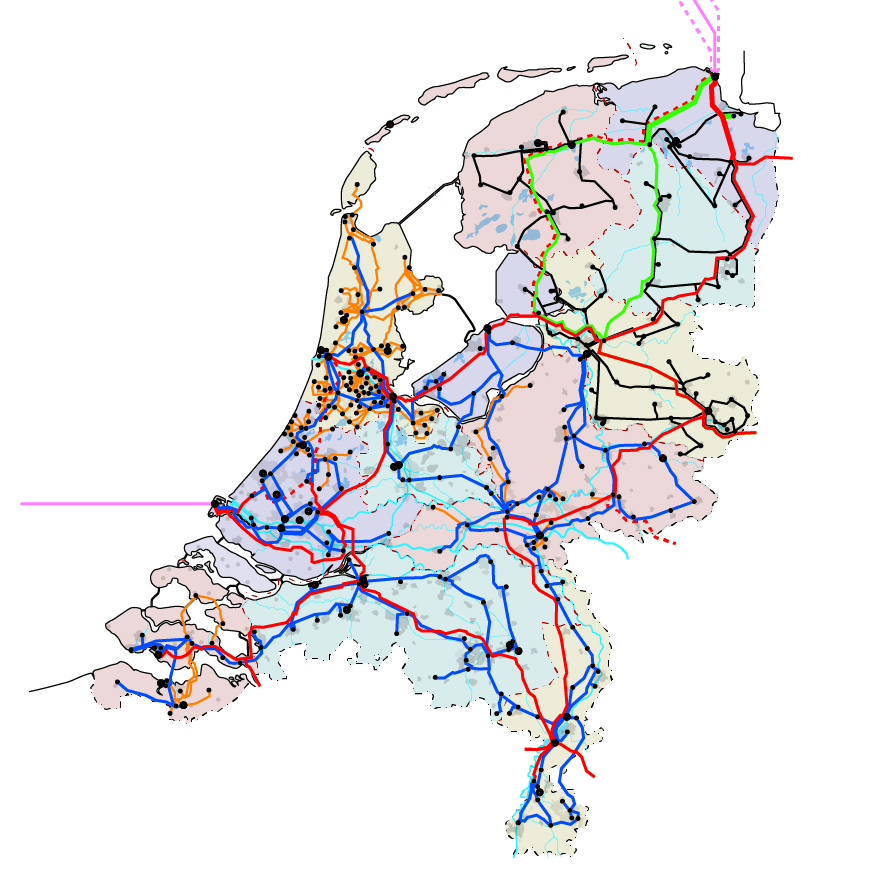
Gradually, society began to interfere itself more and more with the electricity supply. Citizens opposed nuclear energy and visual pollution caused by high-voltage pylons. The govenment was pressured by the industry to lower electricity rates. The historically developed structure of the Dutch electricity supply increasingly mismatched societal developments. The government decided on a complete reorganization of the electricity sector. Under government pressure, around 1986, the production companies were merged into four independent large companies. Similar plans were made for the distribution sector. The sector was given until 1988 to come up with its own proposals for this. Former mayor of Leeuwarden, Brandsma, was hired to map out the situation. This led to the Brandsma Inventory Committee, the Brandsma Steering Group, and the Brandsma Energy Sector Reorganization Guidance Committee. This last committee proposed drastically reducing the number of distribution companies.
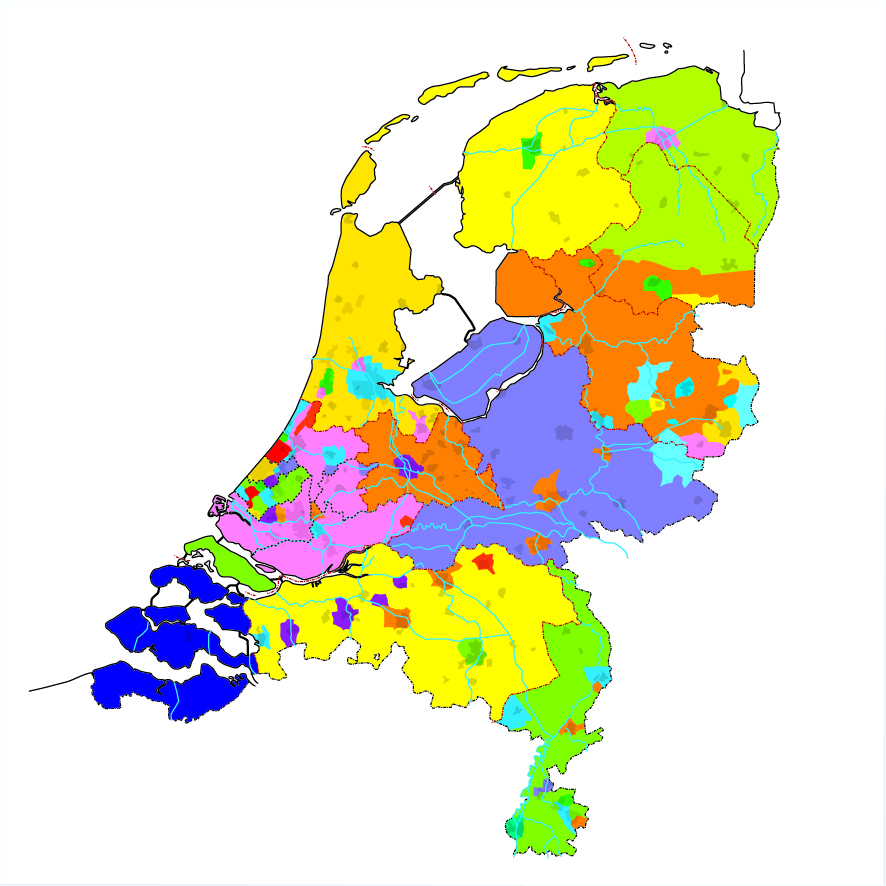
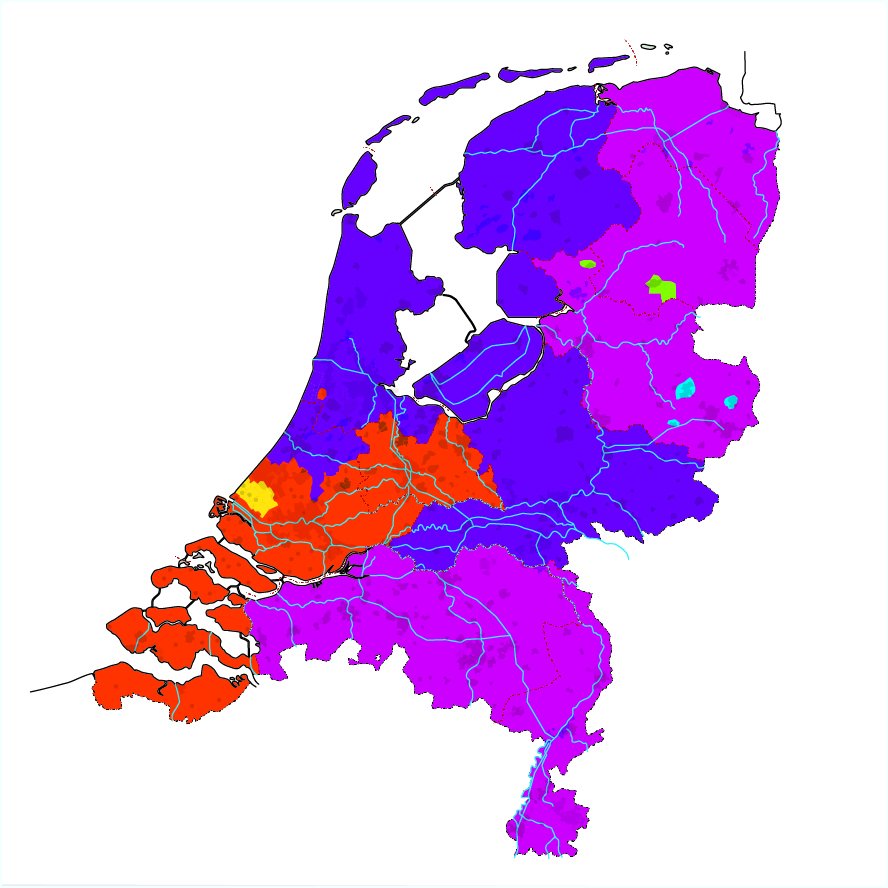
The new structure emerged gradually. Initially, neighboring companies began to collaborate more closely: EGD in Groningen and IJsselmij in Overijssel merged into EDON. In the north and east, two smaller combinations, Rendo and Cogas, also emerged. PGEM took over all independent companies in Gelderland. Similarly, most local companies in Brabant merged into PNEM, and those in Limburg into PLEM (later MEGA Limburg). Around 1995, PGEM and PEB (Friesland) merged to form Nuon. In Zuid-Holland, the largest companies merged into Eneco. The merging and reorganizing did not stop there. In Noord-Holland, the existing collaboration between various municipal companies and PEN transitioned into ENW.
In 1999, a second round of mergers began: first, ENW and Rijnland joined Nuon. The companies EDON, PNEM, and MEGA Limburg, along with the previously independent Heerlen and Leeuwarden, continued together as Essent. The remaining companies in Zuid-Holland and Utrecht, Zuid-Kennemerland and Weert, merged into Eneco.
With the disappearance of the old electricity companies, the existing consultation infrastructure also came to an end: SEP, VEEN, VDEN, and GKN were dissolved, and KEMA was privatized.
The reorganization of the electricity sector gained a new component due to European regulations: liberalization. In 1998, the Third Electricity Act was adopted. The market was opened up in several steps: first for large companies, then for small companies, and finally (in 2004) for individuals. Thanks to the national and European interconnected grid (originally established for reliability), electricity can come from anywhere. Foreign supply has made the significant growth in Dutch electricity consumption possible during those years, without a proportional increase in the production capacity installed in the Netherlands.
The government believed that, in order to promote fair competition and maintain the quality of the infrastructure, the grids should not remain in the hands of parties that trade in electrical energy on a commercial basis. This led to the as yet final step in the reorganization of the electricity sector: the Independent Network Management Act in 2006, also known as the Splitting Act (Splitsingswet). Network operators had to allow competing energy providers and be independent of energy suppliers. The Splitting Act aimed to prevent underinvestment in energy grids due to the commercial risks taken by energy suppliers. According to the Splitting Act, energy companies were divided into commercial production and supply companies and network companies that manage the grids with voltages up to 110 kV. The network companies were owned by provinces and municipalities and will remain in government hands. The National Network Operator TenneT was given responsibility for the national transmission network of 110 kV and higher. As of 2011, all network companies have been privatized. With the completion of the reorganizations, the sector is prepared for the future.
Growth in electricity consumption is expected to continue for the foreseeable future, with the increased capacity being generated either sustainably or otherwise. Producers both domestically and abroad will be eager to meet the demand. The European transmission networks will have to be adapted to accommodate the large power transfers resulting from the increased transport volumes. Due to the construction of several large power plants in the Netherlands, the country will become an electricity exporter.
For the distribution networks, the main challenge is to guarantee supply reliability when incorporating renewable energy and decentralised generation.. Developments in the fields of heat pumps and electric vehicles place heavy demands on the distribution networks, making investments necessary. Due to developmens in the area of ‘smart grids,’ significant changes in the distribution networks are expected in the coming decades. Therefore, there is a growing interest in studies related to these networks.

Phase to Phase, a subsidiary of Technolution. © 2009-2025